| Edward Thorndike (1874 - 1949) |
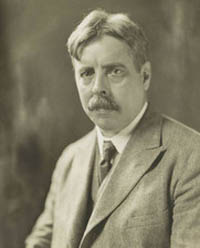 Thorndike developed several laws of learning, including the
premise "other things being equal, exercise strengthens the bond between situation and response" (McGovern and Bray, 2007). He was also
the main pioneer of normative testing.
Thorndike developed several laws of learning, including the
premise "other things being equal, exercise strengthens the bond between situation and response" (McGovern and Bray, 2007). He was also
the main pioneer of normative testing.
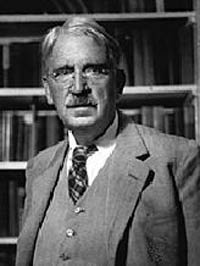 Dewey believed the development of curricula should be
based on student self-interests. This shift was based on his belief that children are primarily motivated by what they are most
interested in, rather than on reward punishment (McGovern and Bray, 2007).
Dewey believed the development of curricula should be
based on student self-interests. This shift was based on his belief that children are primarily motivated by what they are most
interested in, rather than on reward punishment (McGovern and Bray, 2007).
 Don Kirkpatrick is best known for his influential 'four level'
model for evaluating training interventions. He first published his ideas in 1959, in a series of articles in the US Training and
Development Journal, but are better known from a book he published in 1975 entitled, Evaluating Training Programs.
Don Kirkpatrick is best known for his influential 'four level'
model for evaluating training interventions. He first published his ideas in 1959, in a series of articles in the US Training and
Development Journal, but are better known from a book he published in 1975 entitled, Evaluating Training Programs.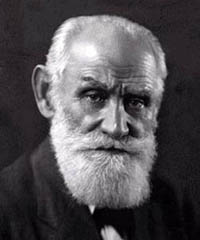 Pavlov won the Nobel Prize for physiology in 1904 for his work on digestion, but instructional designers know Pavlov for his work with "conditioned reflex" (or conditioned response), now labeled "classical conditioning." The most notable demonstration involved ringing a bell whenever his dogs were fed; eventually, the ringing of the bell could trigger the dogs to salivate, even without the presence of food.
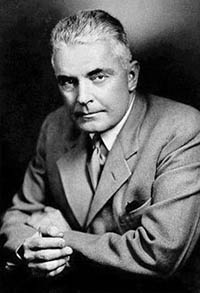 John Watson is the first to coin the term behaviorism. He studied how learning affects our behavior (i.e., our learning alters the way in which we perceive our world, the way in which we perceive stimuli, and ultimately the way we behave).
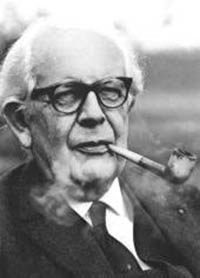 Piaget is best known for his Stage Theory of Cognitive Development. Through observing his children, he posed that children progress through four stages in the following order: 1st Sensorimotor (birth to two years) where the child builds understanding of him/herself and the world around them through interactions with the environment; 2nd Preoperational (two to four years) where the child cannot yet understand abstract concepts and needs concrete physical situation; 3rd Concrete Operations (seven to eleven) where the child begins to think abstractly, creating logical structures that explain his/her experiences; and 4th Formal Operations (eleven to fifteen) where cognition reaches its final form - the child is capable of deductive and hypothetical reasoning.
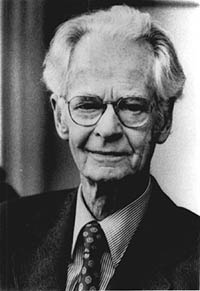 Skinner was a pure behaviorist. He called his approach "radical" behaviorism; it removes "introspection" as a variable or construct in his experiments, focusing only on what can be purely observed in the physical world.
 Some instructional designers consider Gagne to be the father of the profession. He is best known for proposing that there are five categories of learning (now consolidated into the three domains of learning we recognize today; the Cognitive Domain (intellectual skills, cognitive strategies, and verbal information), Psychomotor Domain (motor skills), and Affective Domain (attitudes).
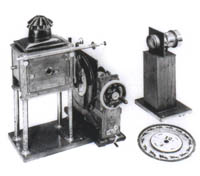 In 1867, William Lincoln is issued a patent for this zoopraxiscope ("wheel of life"), which showed moving drawings or picture through a slit.
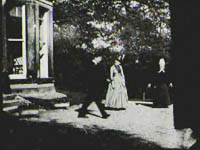 In 1888, Louis LePrince films "Roundhay Garden Scene," the earliest surviving motion picture.
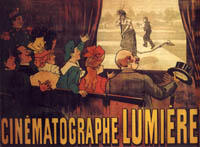 In 1895, Louis Lumiere invents a portable motion picture camera. He and his brother are the first to present projected, moving, photographic pictures to a paying audience of more than one person.
 In 1896, Thomas Edison demonstrates his Vitascope projector, the first commercially successful motion picture projector in the United States.
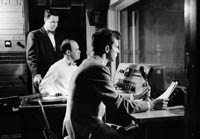 In 1921, the first educational radio license issued to University of Salt Lake. Instructional material is broadcast by radio to students seeking credit or certification. Students range from children in pre-school to adults seeking professional education. The radio programs are used in formal classroom settings, as well as by individual students/listeners continuing their education.
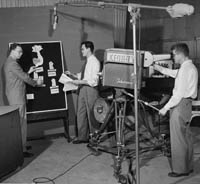 As television finds its way into homes over the 1930s and 1940s, educational television replaces educational radio. In 1953, the FCC reserves 242 channels for education. In 1967, educational television is officially renamed "public television." Public television incorporates "formal" (classroom) and "informal" (cultural, children's, lifelong learning) instructional programming.
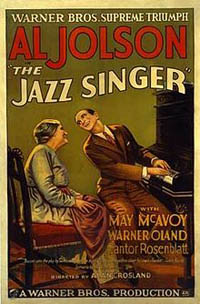 "The Jazz Singer" (1927), starring Al Jolson in the lead role, is the first feature-length motion picture with synchronized dialogue sequences released.
 In 1940, the US Army public relations office requests Warner Brothers Studios to produce short films for educating the public about the military. The US Army Air Corps First Motion Picture Unit (FMPU) was officially organized in 1942. The FMPU produced more than 400 training films for the military during World War II alone.
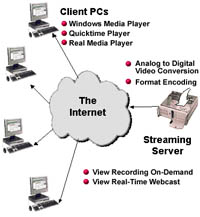 In 1995, RealAudio Player is released. This is one of the first media players capable of streaming audio and video over the Internet. Streaming allows the user to instantly view video and/or listen to audio without the file completely loading first, thus creating a much smoother user experience.
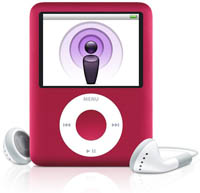 A February 2004 article in The Guardian coins the term "podcasting" to refer to the audio files users can download and listen to on their computer or mobile device. The term combines the words "broadcasting" and "iPod," the most prevalent device used to listen to the files. Users can select individual podcast episodes from various repositories (e.g., iTunes) or can "subscribe" to a series using an RSS (Really Simple Syndication) aggregator, which will automatically search for and download new episodes automatically.
 Started in 2005 by three former PayPal employees, YouTube is a video-sharing website users can upload, share, and view videos over the Internet. Although the website houses thousands of hours of "cute" pet videos and people getting hit in the groin, YouTube also contains more instructional videos than any other source. For example, a search of "Photoshop" yields 1.5 million videos submitted by users demonstrating how to perform specific tasks in Photoshop.
 The Advanced Research Projects Agency Network (ARPANET) is
the world's first operational packet switching network, and is considered the beginning of the Internet.
The Advanced Research Projects Agency Network (ARPANET) is
the world's first operational packet switching network, and is considered the beginning of the Internet. Telenet is the first commercial version of ARPANET,
making a packet-switched network available to the general public. GTE acquires Telenet in 1979, and it is finally acquired by
Sprint and rebranded "Sprintnet."
Telenet is the first commercial version of ARPANET,
making a packet-switched network available to the general public. GTE acquires Telenet in 1979, and it is finally acquired by
Sprint and rebranded "Sprintnet."
 Transmission Control Protocol (TCP) governs connection and the transport of data between software processes on devices. Internet Protocol (IP) provides addressing, routing, and other functions over a network. Together, TCP/IP form the standards that allow the Internet to function.
 The introduction of browsers using HyperText Transfer Protocol (HTTP) and HyperText Markup Language (HTML) allow computers to display pages with complex layouts of text and graphics. Users can still access text-based Usenet newsgroups and electronic bulletin boards, as well as share files via FTP, but this new development transformed the landscape, making the Internet available to a more general audience than the original "nerd herd" that dominated its early days.
 The advent and wide adoption of social networking tools (e.g., MySpace and later Facebook) as well as collaboration tools (e.g., blogs, newsgroups, chatrooms) create a different world of usage. To delineate the contrast between the web of yesterday and the web of today, the term Web 2.0 is introduced.
 Web 3.0, which some call the Semantic Web, is the next generation of the web. It is projected to include TV-quality open video, 3D simulations, and ultra-high broadband (or better utilization of current available broadband) across televisions, computer, laptops, tablets, and mobile devices.
 At its heart, HTML5 (Hypertext Markup Language version 5.0) moves the support for multimedia inside the browsers, thus simplifying the coding and eliminating the requirement of plug-ins to play sound and video files. This leap basically makes tools like Flash unnecessary (it has been called Flash's last nail in the coffin, the first being Apple's decision not to support Flash on their mobile devices).
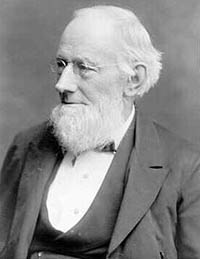 In 1840, Britain introduces one penny rural postage. Soon after, Sir Isaac Pitman launches the first recognized bi-directional correspondence course. Pitman provided instruction in shorthand via post and students would use the instruction to translate a Bible verse in shorthand on a post card and mail it to Pitman for grading.
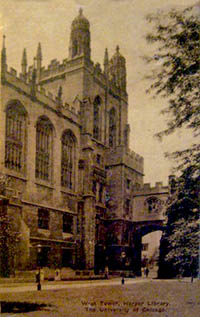 By 1882, University of Chicago establishes their Home Study Division; the United States' first accredited university-level home study program.
 Pennsylvania's Mine Safety Act of 1885 requires miners and inspectors to pass examinations on mine safety. The test is complex, especially for those immigrant miners who spoke little or no English.
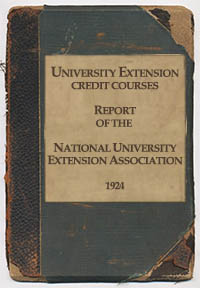 In 1915, the universities and colleges engaged in extension programs create the National University Extension Association (NUEA). Their purpose is "the establishment of an official and authorized organization through which colleges and universities and individuals engaged in educational extension work may confer for their mutual advantage and for the development and promotion of the best ideals, methods, and standards for the interpretation and dissemination of the accumulated knowledge of the race to all who desire to share in its benefits."
 Although the roots of the distance learning and college extension programs continue to thrive to this day, the advent and adoption of wide reaching broadcast technologies and innovations transform the classic "correspondence model," as originally conceived and implemented by Pitman almost 100 years earlier.
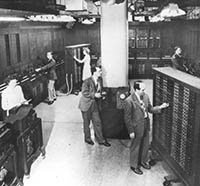 ENIAC (Electronic Numerical Integrator And Computer) is the first general-purpose electronic computer. It is a Turing-complete digital computer capable of being reprogrammed to solve a full range of computing problems.
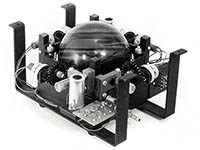 In 1952, Tom Cranston and Fred Longstaff invent the trackball; a precise pointing device for the Royal Canadian Navy's DATAR system. The trackball remains more precise than its “upside-down” cousin, the mouse (invented 11 years later), and is less prone to gathering dust and dirt on its sensors (a big problem with pre-laser mice).
 Douglas Engelbart (with assistance from Bill English) invents the first mouse prototype in 1963. They name the pointing device “the mouse” because the original device resembles a mouse, the cord attached to the rear being its long, thin tail.
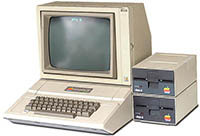 The Apple II is released in 1977, and becomes the first highly successful mass-produced microcomputer (later considered the home computer). The computer transforms Apple Computer (now Apple, Inc.) from a hobbyist supplier into a successful commercial company. By the end of production of the series in 1993, over 5 million have found their way into homes and schools.
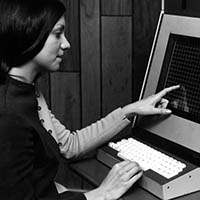 A touchscreen is an electronic visual display that can detect the presence and location of a touch of a finger (or stylus) within the display area. Early touchscreens emerge in the early 1970s and are incorporated into the PLATO systems to allow learners to explore items on the screen and answer “where is the xyz?” graphic identification questions.
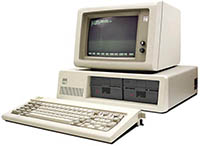 In 1981, basically caught off guard by the success of Apple Computer’s II series, IBM releases the IBM PC (PC stands for Personal Computer). Thinking their established name in the computer business would allow them to quickly outpace Apple, IBM rushes to market with a system based on an open architecture. This strategy backfires, as competitors are able to sell similar computers (referred to as “clones”) at much cheaper prices.
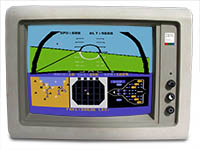 In 1981, the CGA (Color Graphics Adapter) is introduced. It supports a maximum screen resolution of 640x200 with a 4-bit color depth (16 colors). CGA monitors can display basic “chunky” color images, but resolution (640 x200 for two color graphics, or 320x200 for four color graphics) made detailed images (e.g., photos) non-feasible to display.
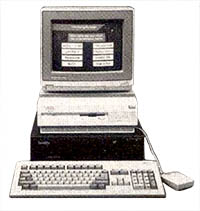 In 1981, Michael Allen “hacks” together an Apple IIe and a videodisc player and develops software to display specific still images or run specific ranges of video through the computer based on user selections or actions, thus creating the first true interactive videodisc (IVD) training.
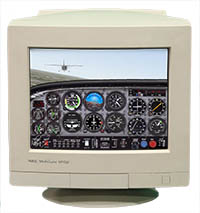 The introduction of the higher resolution Video Graphics Array (VGA) monitor in 1987 brings an increased screen resolution of 800x600 with an 8-bit color depth (256 colors). Although still a far cry from the HDMI high definition capabilities to come, instructional designers can now include photos and gradient shaded images in their products, bringing a new level of “fidelity” to their learning (i.e., they can get away from the gamey feel of earlier products).
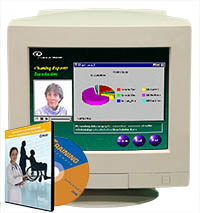 In 1987, Internet and network speeds are still too slow to smoothly deliver high bandwidth images (speech and music audio, as well as high resolution photos, video, and animation) to the learners’ workstation. The CD ROM (Compact Disc Read-Only Memory) changes all that, allowing designers to include such media in their courseware.
 Most sound chips of the 1970’s and 1980’s produced “square waves,” limiting them to “beeps,” “boops,” and basic musical tones. In 1988, companies like AdLib, Turtle Beach, and Creative Labs start producing sound cards capable of playing more complex audio, including human voice and recorded music.
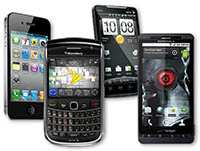 A smart phone is a mobile phone built on a mobile computing platform. Early on, “apps” (programs that run on the mobile platform) replaced PDA functions (calculator, address book, calendar, etc.). Soon, smart phones would become portable audio and video players, video and still cameras, Skype videoconferencing tool, GPS navigation devices, and Web browsers supporting high-speed Wi-Fi access to the Internet.
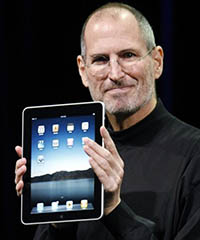 Original predictions of the tablet computer had it replacing the laptop computer. More accurately, the tablet is just a large smart phone. Although most cannot be used as a phone, all tablets can run the same apps as the smart phone platform.
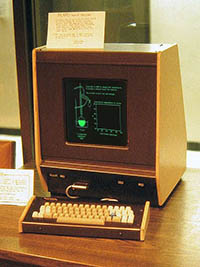 In around 1960, PLATO becomes the first computer assisted instruction system. PLATO was started by the University of Illinois, and was later absorbed into the Control Data Corporation (CDC).
 HyperCard is an application program for Apple Computer, Inc. that was among the first successful hypermedia systems (i.e., it supports complex branching structures) before the World Wide Web. HyperTalk, the programming language under the hood, is intuitive and easy to learn (i.e., for the first time, you do not have to be a programmer to create computer based training).
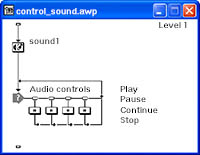 Dr. Michael Allen had helped build the library of interactive courseware for PLATO. In 1987, he released Authorware under his new company by the same name. Benefitting from the lessons learned from overly complex authoring languages, Authoware is an easy to use flowline and icon based authoring tool. Each branch of the flowline represents a decision point or menu, and each icon represents a separately programmed element (e.g., "Display" puts something on the screen, "Question" asks the learner a question, "Calc" performs a calculation).
 Articulate is the branded name for a suite of eLearning tools offered by the company of the same name. Their "studio" includes Engage (creates non-scorable interactions within a PowerPoint-based course), Quizmaker (creates scorable interactions, quizzes, and surveys), and Presenter (converts a PowerPoint presentation into a Flash-based self-paced course).
 PowerPoint uses a "slide" analogy; each "slide" of a presentation is like a separate slide in a projected slide show. Prior to projected PowerPoint "decks," instructors would carry a folder containing overhead transparencies - framed acetate sheets with print and basic images to be displayed on a screen.
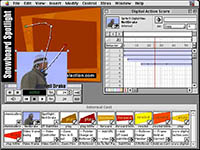 In 1988 a tool known as "VideoWorks Interactive Pro" is reborn as Director. Based on the authoring language Lingo, Director introduces object oriented programming to the computer based multimedia training community. The program uses a "timeline" and different screen and media elements are represented by "actors" on the timeline. Following the analogy, the programmer acts as a director, telling each of the actors when to appear, what to do and for how long, and when to leave.
 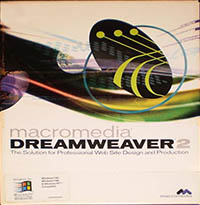 With the immediate boom of the Web, it is clear that computer based training will need to leverage the Internet for wide-spread distribution. Although the basic programming language of the Web (HTML - HyperText Mark-up Language) is easy to learn, more complex programming required to create interactive courseware for the Web browser is very difficult for anyone short of a professional programmer to master.
 Captivate is the perfect storm of integration. Its "ancestors" include a pure screen capturing utility (Flashcam) and an eHelp program (RoboDemo). Macromedia purchases the toolset and creates the eLearning version of RoboDemo, naming the new product Captivate.